Mission & Goals Heading link
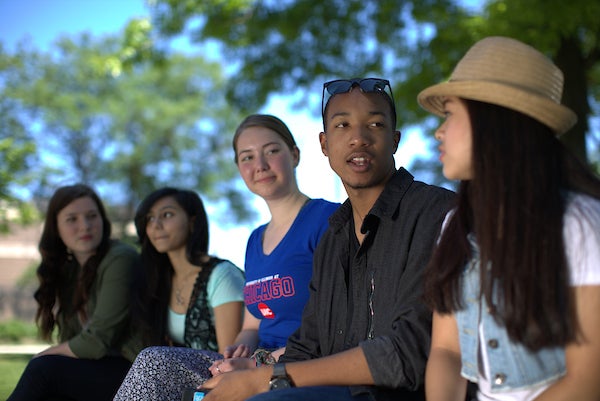
In November 2019, the College of Liberal Arts and Sciences launched the First-at-LAS Academic Success Program to support first-generation college students. Designed to promote their academic success in and outside the classroom, First-at-LAS reflects the college’s deep-seated commitment to serve first-generation college students (FGS) and aligns with its mission to enroll and graduate a diverse student body.
First-at-LAS cultivates strong student outcomes and nurtures post-grad readiness through innovative programs guided by data and research and strategic collaborations with LAS faculty, academic advisors, and career coaches. The program focuses on:
- strengthening student-faculty connection and mentorship,
- providing students with academic strategies and tools to manage the demands and expectations of a LAS education,
- encouraging research involvement,
- promoting network-building and LAS and UIC community,
- increasing student-family college engagement and conversations about the college experience,
- and distributing resources and materials to the LAS community to raise awareness of the FGS experience and offer strategies for engaging and supporting FGS in classrooms and other pedagogical spaces.
Through this work, First-at-LAS is raising LAS’s profile as a leader in the FGS conversation and serving as a model for higher education institutions. Learn about our current programs.
Defining First-Generation College Students Heading link
In First-at-LAS, we use definitions from the National Center for Education Statistics (NCES) and TRIO when referring to first-generation college students:
- NCES defines first-generation college students as students with neither parent nor guardian having any post-secondary experience.
- TRIO defines first-generation college students as students with neither parent nor guardian having graduated with a bachelor’s degree from a four-year college or university.
First-at-LAS and the College of Liberal Arts and Sciences use the same definitions to describe first-generation college students. In data collection and analysis that is performed in the college, first-gen students are treated as two distinct populations based on these definitions. Respective definitions are noted in available data.